








Academic Units
Committee on Environment, Geography and Urbanization (CEGU)
Based in the Division of Social Sciences at the University of Chicago, the Committee on Environment, Geography and Urbanization (CEGU) is an interdisciplinary platform for critical thinking, advanced research, and innovative pedagogy on the societal and spatial dimensions of climate change, biodiversity loss, and other kinds of environmental transformation.
Featured programs: Environmental and Urban Studies major and minor
Committee on Evolutionary Biology (CEB)
CEB provides a means for Ph.D. students to pursue interdisciplinary research that does not readily fall within a single department’s purview. CEB presently has about sixty faculty members representing all four graduate divisions as well as institutions outside the University (Argonne National Laboratory, Brookfield Zoo, Chicago Botanic Garden, The Field Museum, Lincoln Park Zoo, and Morton Arboretum). This diverse faculty conducts research on most major groups of organisms, and in most ecosystems, using an extremely broad range of methods and theoretical approaches. CEB has produced over 100 graduates who are now working around the world in universities, museums, zoos, and governmental and non-governmental agencies.
Department of Ecology & Evolution
E&E hosts diverse faculty and student interests in the ecological and evolutionary processes that underlie patterns of life on earth. The research interests of our faculty include population genetics, molecular evolution, quantitative genetics, animal behavior, plant and animal ecology, evolutionary theory, systematic paleontology, and related subjects.
Featured programs: Graduate Program in E&E and Biosciences; Undergraduate Biology program; University of Chicago Greenhouse; Warren Woods Ecological Field Station
Department of Geophysical Sciences
Geophysical Sciences faculty and students are fascinated with the natural processes that shape our world, and study the history, interior, and exterior of Earth and other planets.
Featured programs: Environmental Science BS major, Geophysical Sciences BA major, Graduate program in Geophysical Sciences
Harris School of Public Policy
Harris Public Policy faculty and students bring an exacting, data-driven perspective to the full spectrum of policy concerns. It’s this point of view, rather than a particular policy domain, that has defined Harris since its founding, guiding us as we address today’s most complex challenges and nurture a new generation of leaders driven to change the world.
Featured programs: Certificate in Energy & Environmental Policy
Pritzker School of Molecular Engineering (PME)
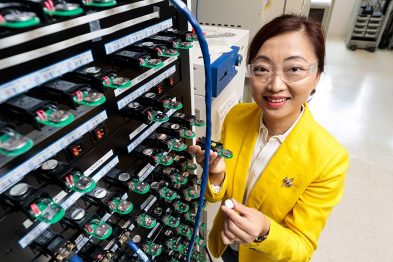
PME integrates science and engineering to address global challenges from the molecular level up. Organized by interdisciplinary research themes, it seek to develop solutions to important societal issues and to educate the next generation of leaders in the fast-growing field of molecular engineering.
Featured programs: Materials Systems for Sustainability and Health
Institutes & Centers
Abrams Environmental Law Clinic
The Abrams Environmental Law clinic attempts to solve some of the most pressing environmental problems throughout Chicago, the State of Illinois, and the Great Lakes region.
Featured programs: traditional Clean Water Act litigation, Clean Water Act-related rule makings and comments, water quantity litigation, drinking water advocacy, climate and energy litigation and policy, and land and mining litigation and policy
Center for Data and Computing (CDAC)
CDAC is an intellectual hub and incubator for data science and artificial intelligence research at the University of Chicago. We catalyze new discoveries by fusing fundamental and applied research with real-world applications.
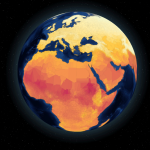
Featured programs: Exploring Climate and Biodiversity with 3D Deep Learning
ChicAgo Center for Health and EnvironmenT (CACHET)
CACHET promotes multidisciplinary environmental health research among clinician, laboratory and population scientists from UChicago and UIC with complementary strengths and structure to understand, evaluate and ultimately reduce environmental health related disparities among residents of the region and beyond.
Institute for Mathematical and Statistical Innovation (IMSI)
IMSI’s mission is to apply rigorous mathematics and statistics to urgent, complex scientific and societal problems, and to spur transformational change in the mathematical sciences and the mathematical sciences community.
Featured programs: Climate Science core theme
Mansueto Institute for Urban Innovation
At the Mansueto Institute for Urban Innovation, we study the fundamental processes that drive, shape and sustain cities. Our researchers come from the social, natural, and computational sciences, along with the humanities. Together, we pursue innovative, interdisciplinary scholarship, develop new educational programs, and provide leadership and evidence to support global, sustainable urban development.
Featured programs: Certificate in Urban Science and Sustainable Development
Neubauer Collegium for Culture and Society
The Neubauer Collegium explores new possibilities for humanistic research by fostering an environment in which new forms of thinking emerge and thrive. Research projects sponsored by the Neubauer Collegium bring together scholars and practitioners whose collaboration is required to address and solve complex challenges.
Featured programs: Climate Games; Engineered Worlds III: Terraformation
Polsky Center for Entrepreneurship and Innovation
The Polsky Center is responsible for advancing all University of Chicago entrepreneurship and research commercialization innovation activities through the creation of new ventures and partnerships. By igniting a spirit of innovation and fostering connections that extend across the University, city, region and world, the Polsky Center enables more ideas to have a meaningful impact on society.
Featured programs: Innovation Corps; John Edwardson Social New Venture Challenge; Polsky Science Innovation Fellows
Rustandy Center for Social Sector Innovation
The Rustandy Center is the destination at the Booth School of Business for people committed to helping solve complex social and environmental problems. As Chicago Booth’s social impact hub, the Rustandy Center offers hands-on learning opportunities, supports innovative courses, and pursues research—all with the goal of developing people and practices with the potential to solve the world’s biggest problems.
Featured programs: Sustainability Executive-in-Residence; Perspectives in Sustainability series; Net Impact Board Fellows Program
Majors, Programs & courses
Ecology and Evolutionary Biology PhD
The graduate program in Ecology & Evolution is part of the Darwinian Cluster (along with the program in Integrative Biology and the Committee on Evolutionary Biology), and of the Biological Sciences Division at the University of Chicago, composed of several programs covering all aspects of biological organization. An overview of admissions, student progress, and completion rates within the Darwinian Cluster is available here.
Energy and Environmental Economics PhD
The Department of Economics and Harris School of Public Policy at the University of Chicago started offering three new PhD courses on Energy and Environmental Economics in academic year 2016-17. Energy and Environmental Economics (EEE) is a growing research field, owing to increasing interest in the area among researchers and policymakers. This increasing interest is creating strong demand for faculty among leading economics departments, policy schools, and business schools.
Environmental and Urban Studies Major and Minor
The Environmental and Urban Studies encourages interdisciplinary approaches to the complex interactions and intersections of urbanism, environment, and society by incorporating frameworks, theories, models, and methods from the humanities, social sciences, natural sciences, urban planning and design, and urban science. Students can choose to focus on either the Environmental Track or the Urban Track. Students interested in urban environmental topics can design their program of study through either track.
Environmental Science Major
The Department of the Geophysical Sciences offers a BS degree in Environmental Science. The program is intended for students whose interests fall at the intersection of biology, chemistry, and earth sciences, and is designed to prepare them to enter a variety of interdisciplinary fields in the environmental sciences, including the interface of environmental science and public policy. Students are given the opportunity to study such topics as the biogeochemical cycles, environmental chemistry, microbiology, ecology, the chemistry and dynamics of the ocean and atmosphere, climate change, and environmentally relevant aspects of economics and policy.
Geophysical Sciences Major
The Department of the Geophysical Sciences (GEOS) offers BA and BS degree programs of study in the earth, atmospheric, and planetary sciences. Topics include the physics, chemistry, and dynamics of the atmosphere, oceans, and ice sheets; past and present climate change; the origin and history of the Earth, moon, and meteorites; properties of the deep interior of the Earth and the dynamics of crustal movements; and the evolution and geography of life and the Earth’s surface environments through geologic time. These multidisciplinary topics require an integrated approach founded on mathematics, physics, chemistry, and biology.
Public Policy Major with a Specialization in Energy and Environment
The program of study for the BA degree in Public Policy is designed to train visionary, inspired leaders in policy analysis and implementation; equip them with quantitative, theoretical, and critical-thinking tools; enhance their communication skills; and provide them with a thorough grounding in one or more specific policy areas. The Specialization requirement consists of three upper-division courses within a subfield or policy domain. These courses must be policy-relevant and fit comfortably within the specified Specialization.
Certificate Program in Urban Science and Sustainable Development
The Mansueto Institute’s Certificate in Urban Science and Sustainable Development trains students for careers that address the most challenging and important systemic issue of our time – sustainable urban development. The certificate, which University of Chicago students take in conjunction with existing UChicago degree programs, establishes the scientific and intellectual underpinnings for continued work in this emerging field. It is a response to the challenges of our times, as well as the growing demand for an urban-focused curricular pathway for UChicago scholars.
Data Science for Energy and Environmental Research program (DSEER)
DSEER, supported by an NSF NRT grant, provides funding and resources for graduate students (PhD or academic MS) doing data-driven work in environmental areas, with a special emphasis on research that touches on energy, food, and water (including climate and ecological systems). The goal is to build community among students and to provide training in computational and statistical tools that can enrich students’ primary thesis work.
Chicago Studies Program
Chicago Studies Quarters mirror the University’s Study Abroad programs, especially those based in cities, that advocate civic literacy, contact, acculturation, and excursion as companion dimensions of learning. Structured as “bundles” of two, three, or four classes, Quarters offer students in the College the opportunity to immerse themselves in Chicago with distinguished instructors versed in aspects of the life and history of the city’s diverse communities. Look out for more information on the Calumet Quarter.
Certificate in Chicago Studies
The College’s interdisciplinary Certificate in Chicago Studies recognizes students who have meaningfully integrated their academic inquiry with positive, impactful engagement in Chicago across their years in the College. The certificate is available to students in any field of study; the specific fulfillment of its requirements (below) is unique to each student. Students may choose to focus their certificate program on discipline-based, academic study of the city; pre-professional experience with one or more Chicago institutions; deep engagement with a particular community; or social change and advocacy work. Students pursuing the certificate have access to advising and support from Chicago Studies’ team.
Environmental, Social, and Governance (ESG) Training Course
The Environmental, Social, and Governance Research Initiative Center (ESGRIC) offers a course on “Environmental, Social, and Governance Training” taught by Dwight Hopkins, the Alexander Campbell Professor of Theology at the Divinity School. Prof. Hopkins is a constructive theologian teaching classes on social entrepreneurship and working in the areas of contemporary models of theology, various forms of liberation theologies, and East-West cross-cultural comparisons. Interested students can contact dhopkins@uchicago.edu.
Green Data Program
Green Data is a one-year, selective program for students interested in using data and technology to tackle some of today’s most pressing issues with data and public policy. The program helps students explore how they can make an impact on sustainability, public policy, and climate change using data. The Green Data Program brings together experts and thought leaders from across the University, including the Data Science Institute, the Harris School of Public Policy, the Program on the Global Environment, and more. In addition to expert support from program staff, all Green Data Program participants will receive an upper-class student mentor. Students will have opportunities to meet with their mentor throughout the program to informally discuss career planning, networking internships, and more. Students with an interest in data, sustainability, and public policy and those from underrepresented backgrounds are strongly encouraged to apply.
Semester in Environmental Science at MBL
The Semester in Environmental Science is a 15-week fall semester at the Ecosystems Center of the Marine Biological Laboratory in Woods Hole, Massachusetts. The curriculum provides an intensive field and laboratory-based introduction to ecosystem science and the biogeochemistry of coastal forests, freshwater ponds and estuaries.